
The Florence Nightingale Foundation asked us to show what its leadership programmes really change, from senior nurses and midwives transforming their own services to the four UK Chief Nursing Officers. We filmed across two days in London and Bristol, and online with the CNOs.
Admiration isn’t a story.
Most films about nursing look and sound alike: compassion, resilience, dedication and a soft piano. All true, and all things audiences already believe. Nobody finishes those films knowing something new.
FNF’s work sits somewhere more interesting. In its own words, it develops nurse and midwife leaders at every career stage, enabling them to stay, thrive, lead and transform health and care. Nurses and midwives often see what needs to change long before they feel able to change it.
FNF gives them the time and space to grow, and these films are about what they did with it.
Let them say it.
We didn’t want a narrator explaining leadership development. We wanted the people who’d been through it to tell us what changed. So we kept the questions short and personal, and gave people room to answer.
One contributor summed it up: “It gave me the confidence, it gave me the poise, it gave me the presence.” Another talked about finally having time to step back, think properly and work out where they could have influence.
Then came the ripple, in their own examples. A digital nursing workflow that means patients no longer have to keep repeating their history. A screening service for homeless women, in a place where they feel comfortable. An organisation whose senior leaders have all stayed in post for at least four years. Nobody was reading from a script, and you can hear it.
Where the ripple leads.
FNF develops leaders at every career stage, and the four UK Chief Nursing Officers show where that can lead. Three of them are FNF alumni. So when FNF wanted to inspire the class of 2026 at its Scholar Conference, it asked the CNOs for England, Scotland, Wales and Northern Ireland to share their stories on film.
It’s the same story as the impact films, told from the very top: what shaped them, what leadership asks of them now and their advice for scholars just starting out. FNF stayed in the background, with its logo only at the end.
We filmed each CNO online, fitting around their diaries rather than asking them to come to us. With four of the busiest people in UK nursing, every question had to count. Ask a senior leader something short and personal, and you’ll often get the line you’d have struggled to write.
Two films, one shoot.
The impact campaign needed two films for two audiences. The fundraising film asks the organisations who fund and commission FNF’s work to invest. The marketing film asks nurses and midwives to apply. One film trying to do both would do neither well. So we planned the interviews with both audiences in mind, then gave each film its own opening, story order and call to action.
Charities need every filming day to work hard, and we think the saving should come from smart capture rather than identical films. We planned for social from the start too, gathering enough extra material for a full set of clips to follow once the main films are out.
Filming around the people who run the wards.
Our contributors were senior leaders running teams and services, and many travelled from across the UK to take part because they believe in what FNF does. Finding time in those diaries was a big ask, for us and for FNF.
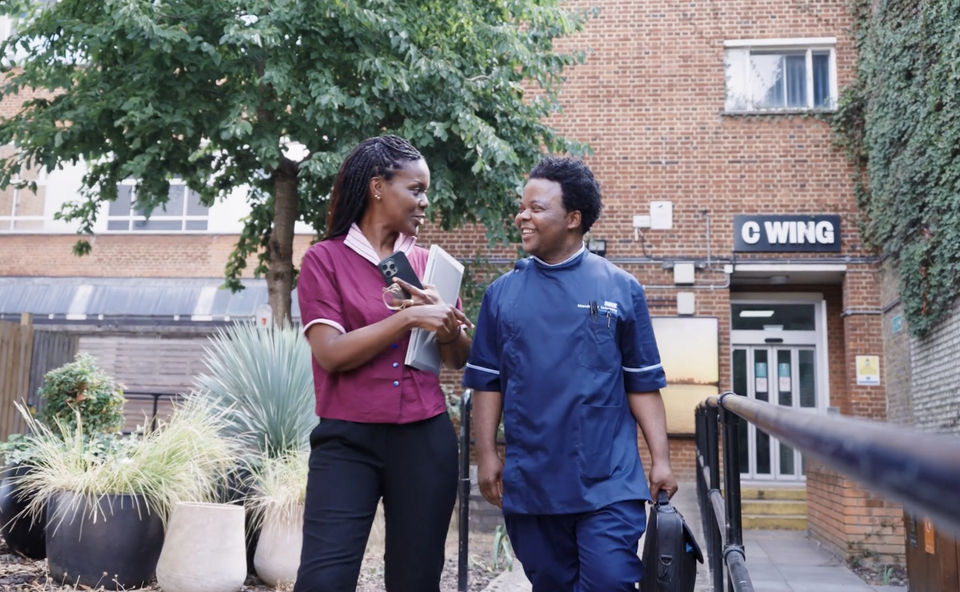
Day one was at a training hospital in London, where access was easier. Day two was at a live hospital in Bristol, where it very much wasn’t. Patients come first there, and a camera is the least important thing in the building.
That meant two-camera interviews, a handful of B-roll and a tight timeline. When you can’t film much around your contributors, the interview carries everything, so it has to be right first time.
We ran two crews, and either could step in for the other. That comes from years of working together, and from sharing the same instinct for when to push for one more answer and when to put the camera down.
FNF fundraising film:
Video coming soon
“If you can affect the care of one individual, you affect a family, you affect a community and beyond.”
What it means for you.
If your organisation’s impact happens through other people, resist scripting their story. Ask good questions, give them room and let them tell you what changed.