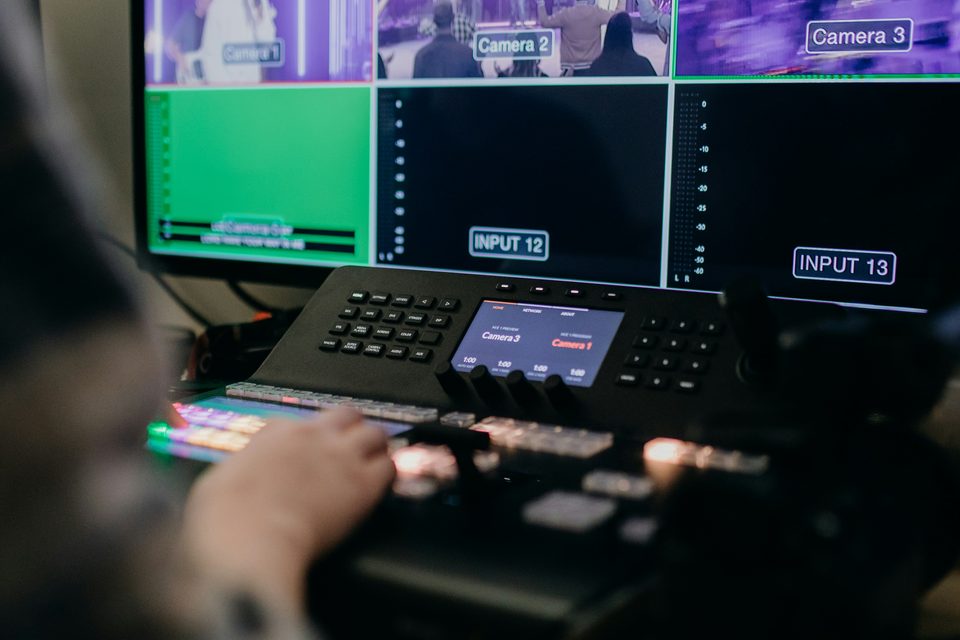
Live streaming an event well means treating the online audience as seriously as the room. That takes good camera angles, clean sound, someone talking to viewers and a plan for when things go wrong.
Most events are hybrid now, and the people watching from home are often the bigger crowd. They deserve better than a wobbly wide shot.
“Someone watching on a laptop should feel the room, not just see it.”
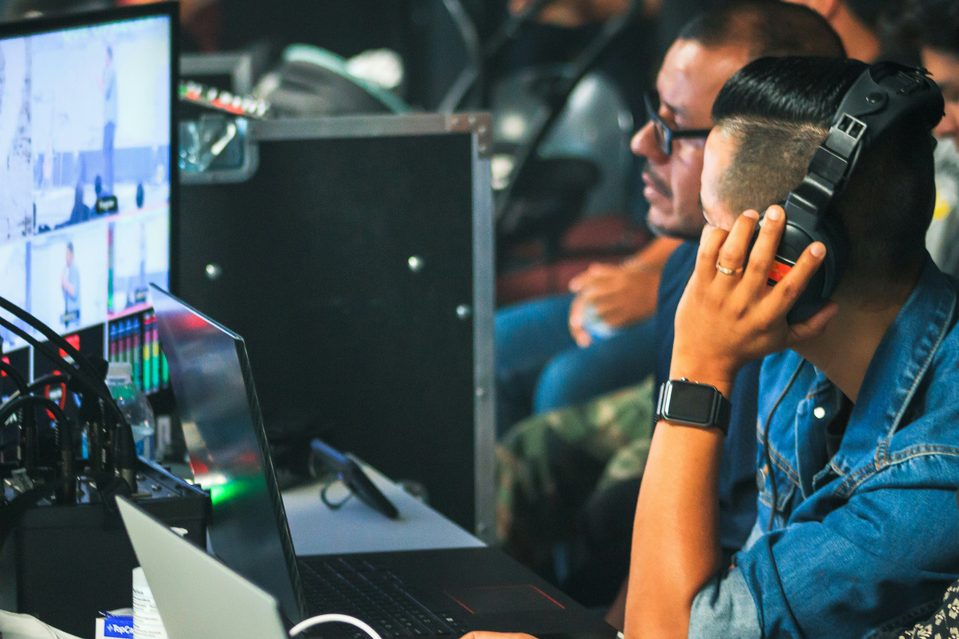
How many cameras do you need to live stream an event?
Most events need two or three. One camera at the back of the hall tells remote viewers they’re an afterthought: they can’t see faces, can’t read the slides and drift off within minutes. A close-up of the speaker, a wide of the room and slides fed straight into the stream make them feel part of it.
Why does sound matter more than picture?
Because people forgive a soft image, but they switch off the moment audio echoes or drops out. We take sound straight from the venue’s desk, test every microphone and keep someone listening to the stream itself, not just the room.
How do you keep an online audience engaged?
Give them a host. Someone who welcomes viewers, reads out their questions and fills the gaps makes a stream feel like an event rather than a feed. Short pre-recorded films cover the changeovers, so nobody is left staring at an empty stage.
What happens if a live stream goes wrong?
Live means no second take, so preparation is everything. Backup internet, spare kit and a full rehearsal turn a potential disaster into a brief wobble that viewers rarely notice.
What it means for you.
Plan your stream with the same care as your stage, and keep the recording. A well-produced live event becomes highlights, clips and on-demand content that keeps working for months. From our base in Leicester, we stream events across the UK and beyond.