
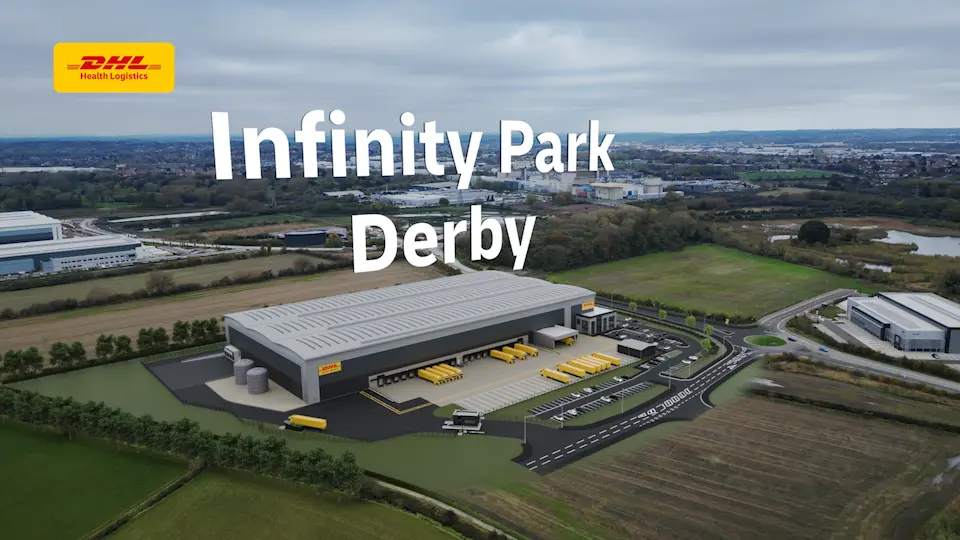
Most films about new warehouses look the same: a sweeping drone shot, a glossy render and a wall of numbers. For DHL’s new healthcare hub in Derby, still under construction when the film was needed, we wanted to make something a buyer would actually believe.
Nobody buys a render.
We’ve watched a lot of facility films. Most are fly-throughs of immaculate, empty buildings, with specs sliding past faster than anyone can read them. They look expensive and say almost nothing. The flawless empty render has become the stock photo of our industry.
The real problem is trust. A pharmaceutical company choosing where to keep its stock is deciding who to trust with products patients depend on. A perfect, empty building doesn’t earn that. If anything, it feels like a promise nobody has tested yet.
So the question for Infinity Park wasn’t how to make it look impressive. It was how to make it feel real.
Real where it counts.
Our answer was to surround the 3D with things that were genuinely true.
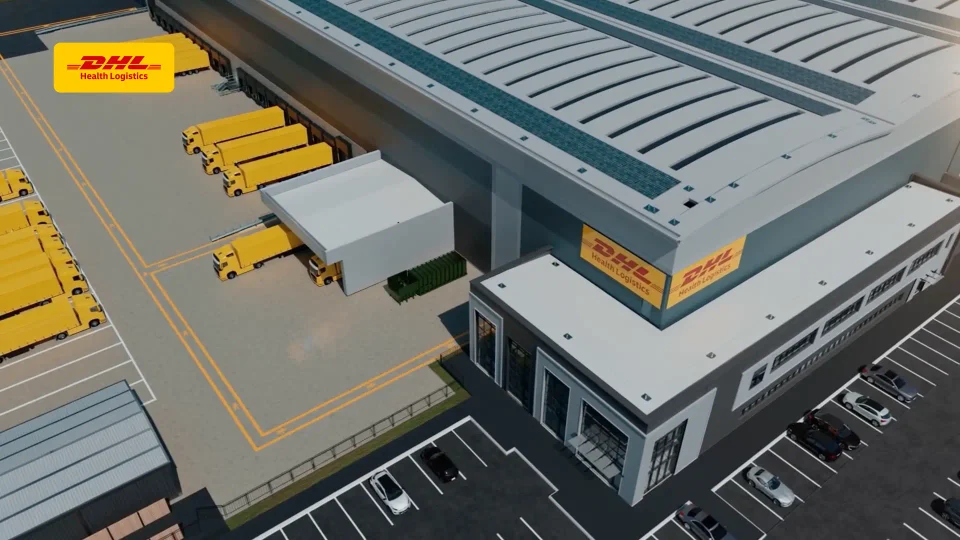
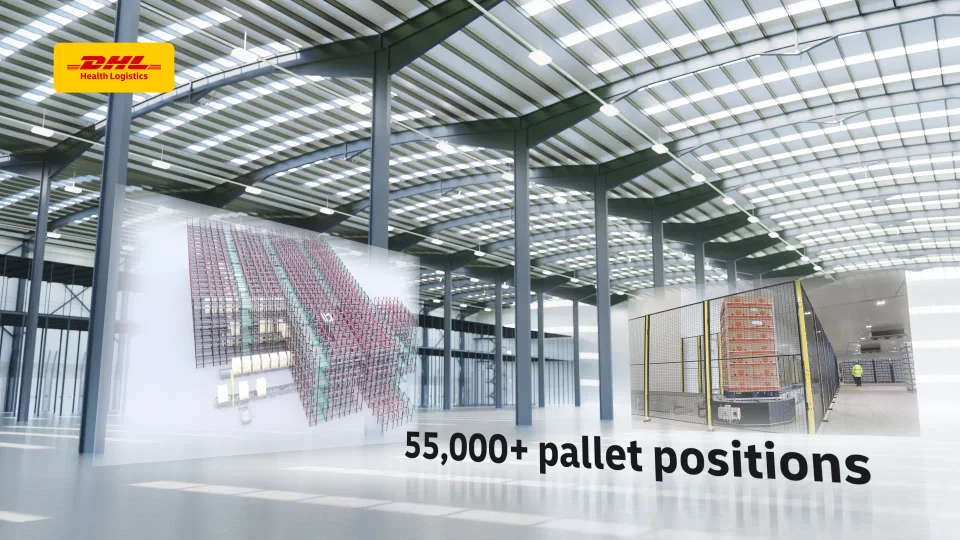
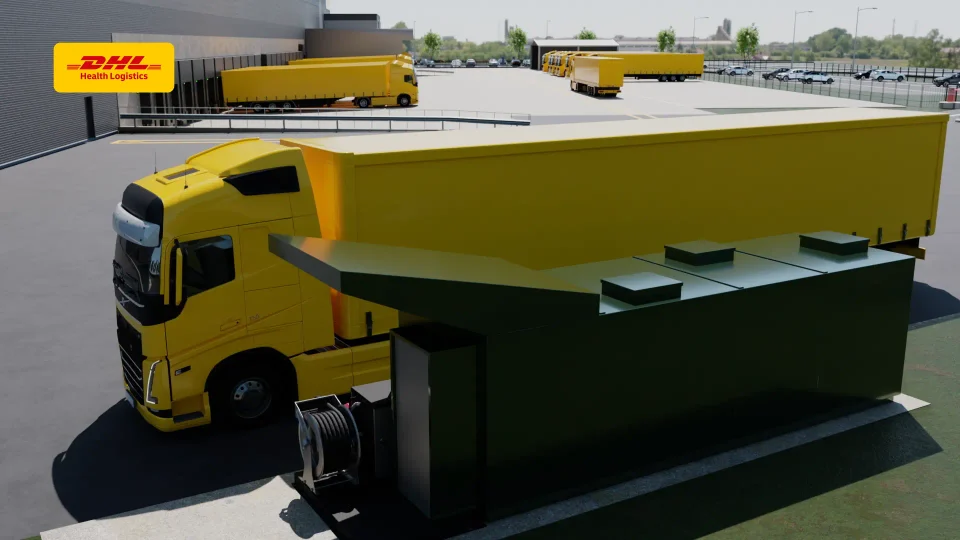
The building had to be 3D, built from technical drawings and informed by drone surveys of the site. Inside it, we composited manufacturers’ own footage of the automation systems the site will use. We added footage from years of pharmaceutical shoots for DHL, showing real people handling real product at the right temperature, and filled the last gaps with carefully chosen stock.
The result sits somewhere between animation and documentary. You see a building that doesn’t exist yet, working the way it will. That blend is harder to pull off than pure CGI, because every join has to disappear. We’d still choose it every time, because it’s far more persuasive.
Speaking to four markets at once.
Infinity Park serves consumer health, pharmaceuticals, medical devices and animal health. Each has different products, rules and fears. The temptation is to name them all, and that’s how scripts turn into lists.
We went the other way: plain language, with the specifics doing the work. Ambient to cryogenic storage. A controlled drugs vault. Most of the UK within a four-hour drive. A buyer who needs frozen storage hears frozen storage. One who worries about security sees the vault. Nobody needs telling the film is for them.
The detail is the creative work.
There’s a view that checking figures is admin, something to tidy up once the creative is done. We think that’s backwards, and in regulated industries it’s dangerous.
A healthcare logistics buyer will spot a wrong number immediately, and once they have, nothing else in the film matters. Big projects generate a lot of documents, and they don’t always agree. When they don’t, we stop and ask before a single caption is locked. We never pick the likelier figure and hope. Unglamorous, yes. It’s also why a specialist can watch the film and believe it.
Where AI earns its place.
AI was part of the process, and we’re glad it was. It helped us visualise the building faster and more accurately, test versions of the voiceover in minutes instead of days, and keep refining the script until every line earned its place.
What it did was make trying things cheap, so we could try more of them. What it didn’t do was decide which version was right. Knowing what a regulated buyer will notice, and what they’ll forgive, comes from years in the room with DHL’s teams. That judgement is the job, and it isn’t something we’d hand over.
What it means for you.
If you’re launching something people can’t see yet, don’t reach for the glossiest render you can afford. Reach for whatever is already true: the drawings, the kit, the people and the footage you’ve built up over years. Build the story around that, get every detail right, and the film will do what a brochure never could.